








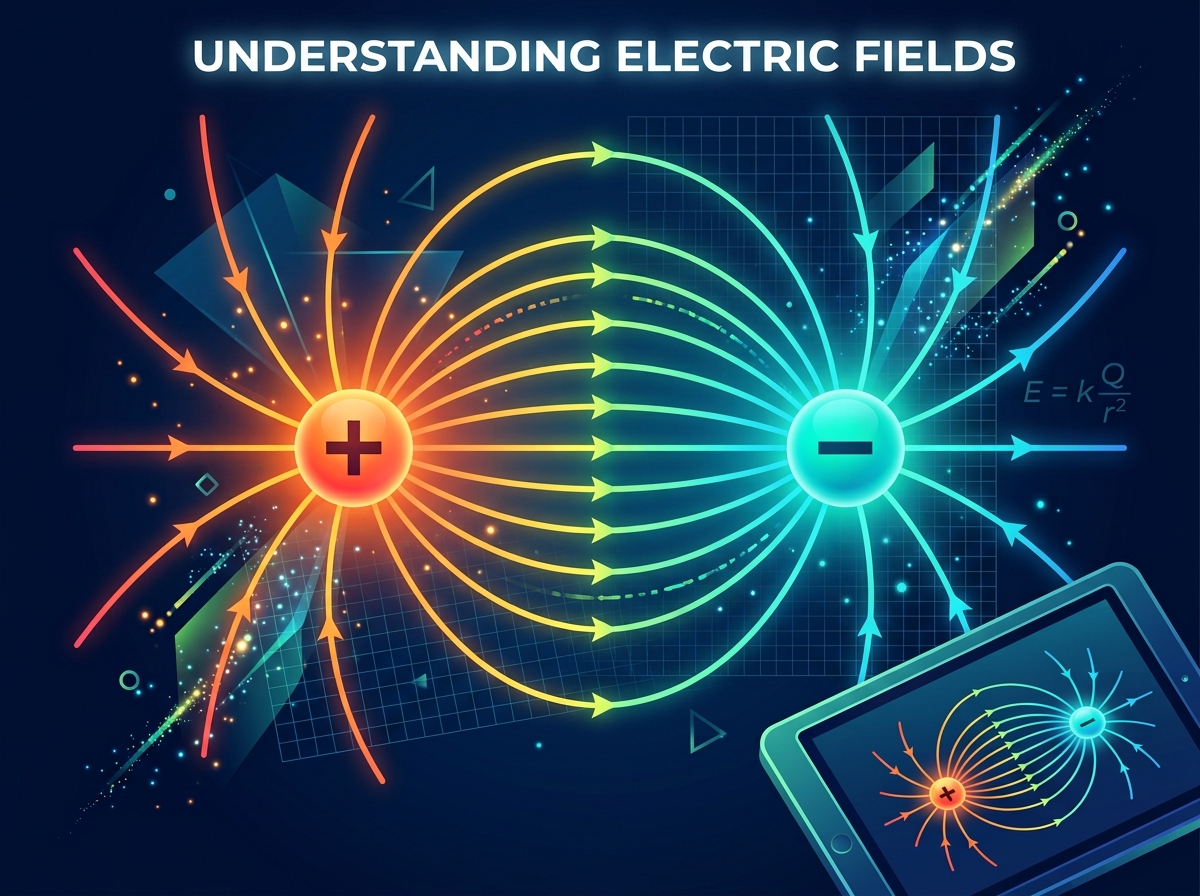
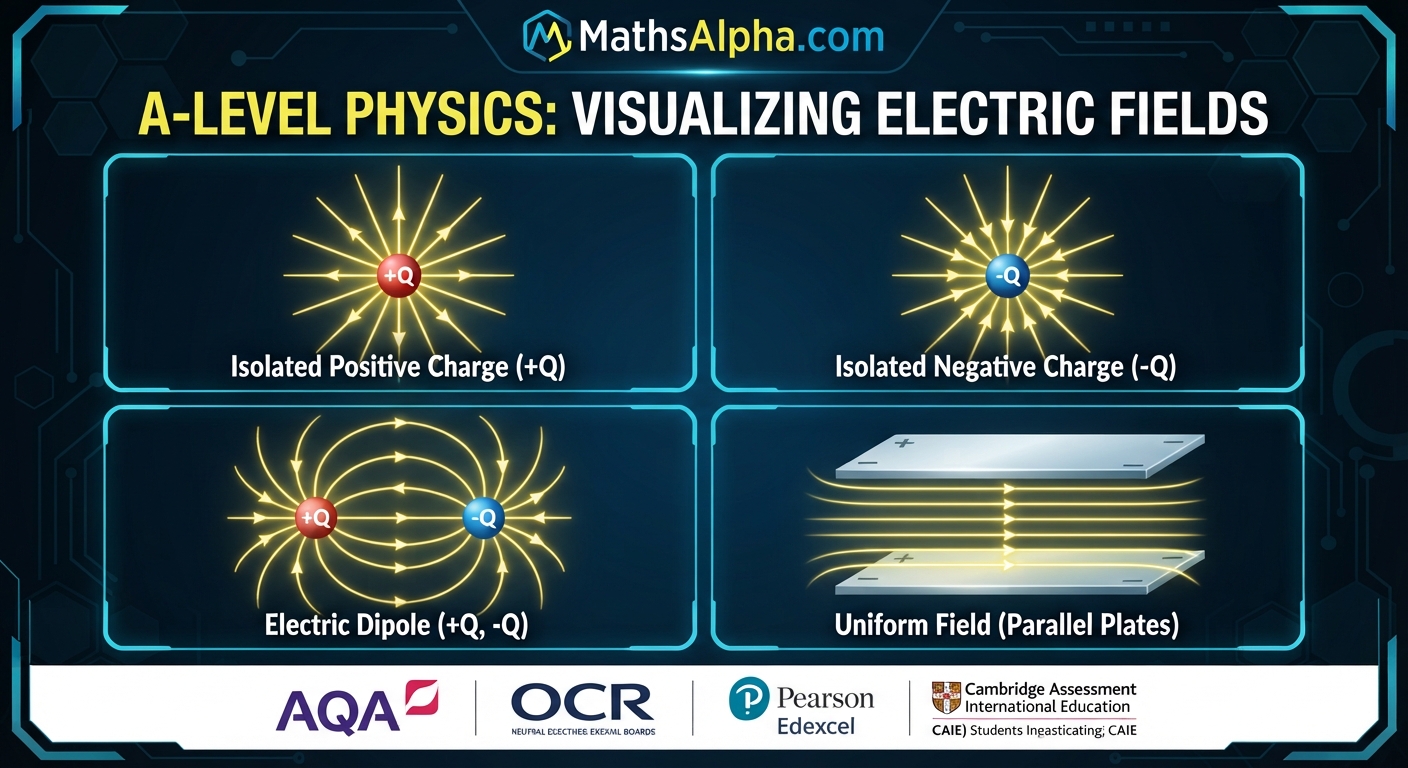
An electric field is a fundamental concept in physics, defined as a region in space where an electrically charged object experiences a non-contact force. Whether you are studying GCSE or A-Level Physics, mastering electric fields is essential for understanding electrostatics, atomic structure, and circuit theory.
At the GCSE level, the focus is on understanding key concepts and visualizing field patterns:
At A-Level, students dive deeper into quantitative analysis and field geometry:





.png)

.png)
.png)
.png)



.png)
.png)

.png)


.png)




.png)
.png)
1.png)






.jpeg)





See our Trustpilot Excellent Reviews