







.png)
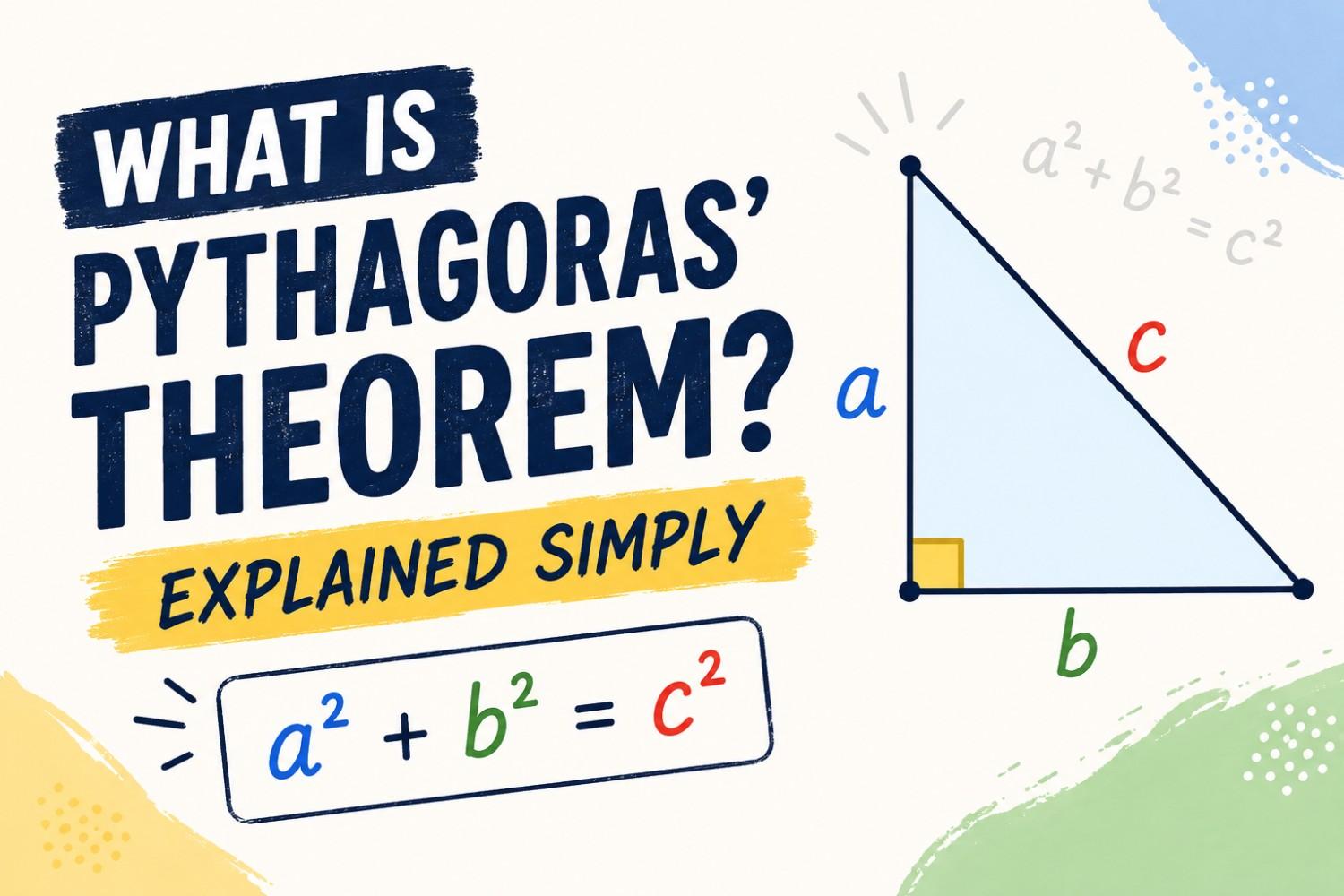
Square numbers are one of the most important topics in mathematics. They appear in arithmetic, algebra, geometry, and problem-solving throughout the UK maths curriculum. Understanding square numbers helps students build a strong foundation for more advanced concepts such as indices, quadratic equations, and Pythagoras' theorem.
In this guide, we will explain what square numbers are, how to identify them, and where they are used in real-life maths problems.
A square number is the result of multiplying a whole number by itself.
In simple terms:
Each answer is called a square number because the numbers can be arranged into perfect square shapes.
For example:
A square number can also be written using powers:
The small "²" means "squared."
A number is a square number if it can be written as:
n × n
where n is a whole number.
Examples:
Non-examples:
These numbers cannot be formed by multiplying a whole number by itself.
The name comes from geometry.
Imagine arranging counters into equal rows and columns.
For example:
Because these arrangements create perfect squares, the numbers are known as square numbers.
Every square number has a square root.
A square root is the number that is multiplied by itself to create the square number.
Examples:
Students usually begin learning square roots after becoming familiar with square numbers.
Square numbers are introduced progressively throughout the UK curriculum.
Students learn:
Students develop an understanding of:
Square numbers are used in:
A strong understanding of square numbers helps students succeed in higher-level mathematics.
Square numbers appear in everyday situations.
If a square has a side length of 5 cm:
Area = 5 × 5 = 25 cm²
A square garden measuring 10 metres on each side has:
Area = 10 × 10 = 100 square metres
Square tiles are arranged in rows and columns, often creating square-number patterns.
Square numbers are used in algorithms, data structures, and programming calculations.
Students can memorise square numbers more easily by:
The more often square numbers are used, the easier they become to recognise.
At MathsAlpha, we help students build confidence in mathematics through structured lessons, expert guidance, and curriculum-focused learning. Our experienced tutors explain topics such as square numbers, square roots, algebra, geometry, and GCSE problem-solving using simple methods that students can easily understand.
Whether your child is preparing for SATs, Key Stage assessments, or GCSE Maths, we provide personalised support designed to improve mathematical understanding and exam performance.
A square number is created when a whole number is multiplied by itself. Examples include 1, 4, 9, 16, 25, and 36. Square numbers are an essential part of the UK maths curriculum and form the foundation for many advanced mathematical concepts.
By learning square numbers early and practicing regularly, students can improve their confidence and develop stronger problem-solving skills throughout their maths journey.

.png)
.png)
.png)

.png)
.png)
.png)
.png)

.png)
.png)
1.png)


.jpeg)



See our Trustpilot Excellent Reviews