







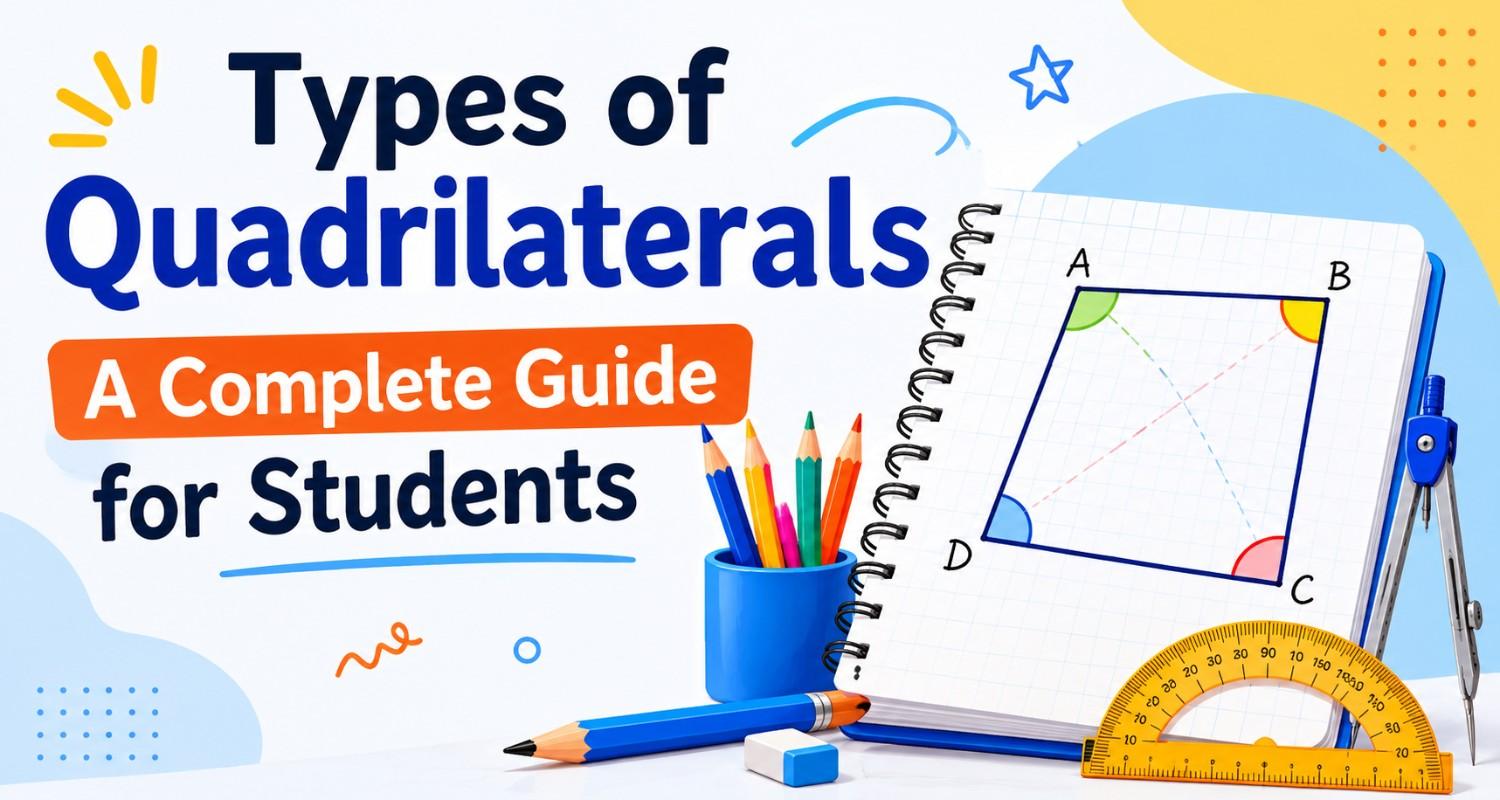
Quadrilaterals are one of the most important topics in geometry. A quadrilateral is a closed 2D shape that has four sides, four vertices, and four angles. One important property of all quadrilaterals is that the sum of their interior angles is always 360°.
Understanding the different types of quadrilaterals helps students build a strong foundation in geometry and prepares them for more advanced mathematical concepts. In this article, we will explore the six main types of quadrilaterals: square, rectangle, parallelogram, rhombus, kite, and trapezium, along with their properties, formulas, and examples.
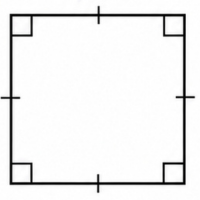
A square is a special quadrilateral in which all four sides are equal and all four angles are right angles (90°).
Area = Side × Side = Side²
If the side length of a square is 6 cm:
Area = 6 × 6 = 36 cm²
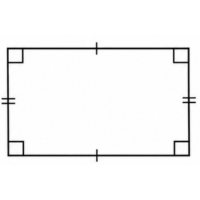
A rectangle is a quadrilateral where opposite sides are equal and all four angles are 90°.
Area = Length × Width (or Height)
If the length is 8 cm and the width is 5 cm:
Area = 8 × 5 = 40 cm²
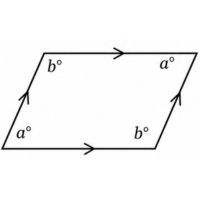
A parallelogram is a quadrilateral in which both pairs of opposite sides are parallel.
Area = Base × Height
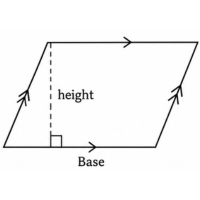
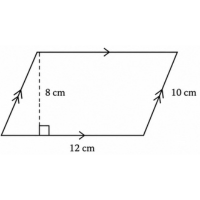
As shown in the notes, the parallelogram has:
Area = 12 × 8
Area = 96 cm²
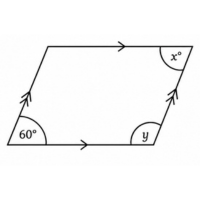
Given one angle is 60°.
Since opposite angles in a parallelogram are equal:
x = 60°
The sum of all angles in a quadrilateral is 360°:
60° + 60° + y + y = 360°
120° + 2y = 360°
2y = 240°
y = 120°
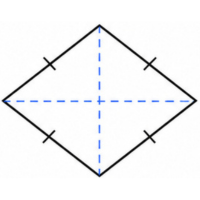
A rhombus is a special type of parallelogram in which all four sides are equal.
Suppose a rhombus has angles:
The remaining two angles are:
180° − 70° = 110°
Therefore, the angles are:
70°, 110°, 70°, 110°
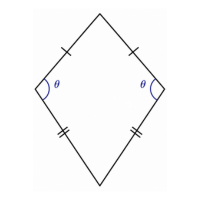
A kite is a quadrilateral with two pairs of adjacent equal sides.
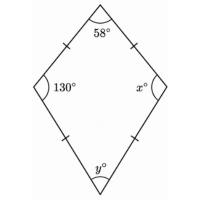
As shown in the notes:
Using the angle sum property:
58° + 130° + 130° + y = 360°
318° + y = 360°
y = 42°
Therefore:
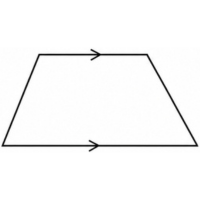
A trapezium is a quadrilateral with exactly one pair of parallel sides.
Area = (a + b) × h / 2
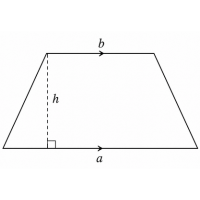
Where:
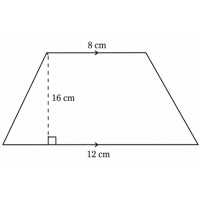
From the notes:
Area = ((12 + 8) × 6) / 2
Area = (20 × 6) / 2
Area = 120 / 2
Area = 60 cm²
Quadrilaterals appear everywhere in daily life from buildings and roads to screens and furniture. Learning their properties helps students:
By understanding the differences between squares, rectangles, parallelograms, rhombuses, kites, and trapeziums, students become more confident in solving geometry problems.
At MathsAlpha, we make geometry simple, engaging, and easy to understand. Topics such as squares, rectangles, parallelograms, rhombuses, kites, trapeziums, area formulas, angle properties, and problem-solving are taught step-by-step using clear explanations and exam-focused examples.
This topic is covered in our
Our experienced tutors help students build confidence, improve problem-solving skills, and achieve better results in school assessments and GCSE examinations. Whether you need



.png)
.png)
.png)
.png)

.png)
.png)
.png)

.png)


.png)
.png)
1.png)


.jpeg)




See our Trustpilot Excellent Reviews