






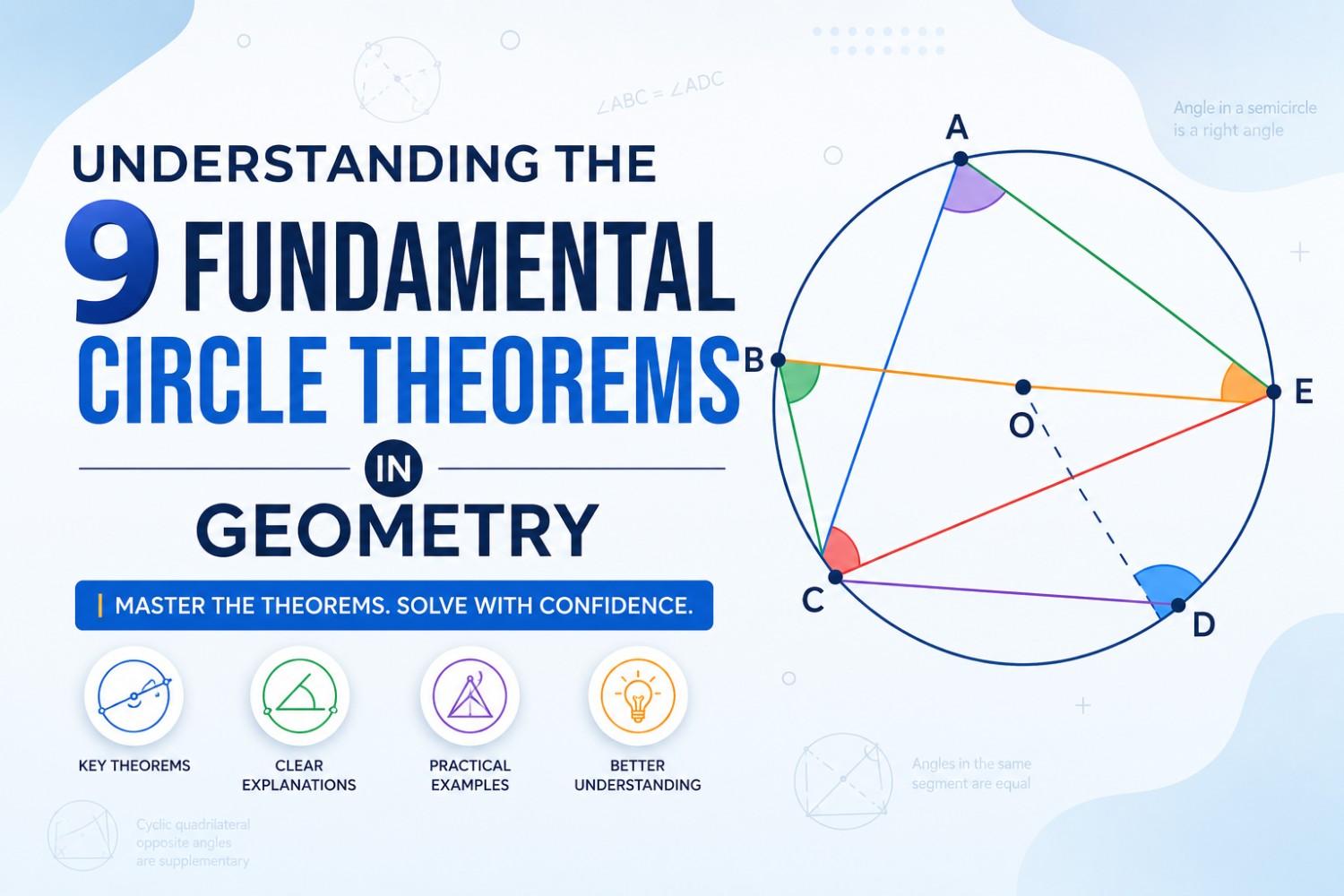
Circle theorems are one of the most important topics in geometry. They help students understand angles, arcs, chords, tangents, and how different parts of a circle are connected. These theorems are widely used in school mathematics, competitive exams, engineering, architecture, and real-life design problems.
If you are preparing for school exams or improving your geometry skills, learning circle theorems is essential. In this guide, we will explain 9 important circle theorems in a simple and easy-to-understand way with examples.
A circle is a 2D shape and is defined as the locus of a variable point such a way that the distance from a fixed point and the variable point is a constant. The fixed point is called the centre of the circle, and the constant distance is called the radius.

CP is called the radius of the circle, and it's denoted by r.
A circle has many important parts:
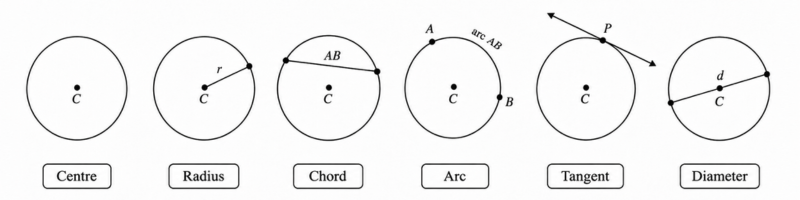
Circle theorems connect these parts using angle relationships.

One of the most important circle theorems states:
The angle subtended by a diameter at the circumference is always a right angle (90°).
When a triangle is formed using the diameter as one side and a point on the circumference as the third vertex, the angle opposite the diameter is always 90°.
Applications
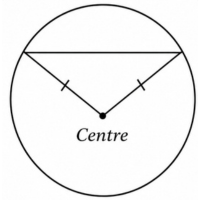
When two radii are drawn from the centre of a circle to the endpoints of a chord:
Key Property
If CA and CB are radii:
Applications
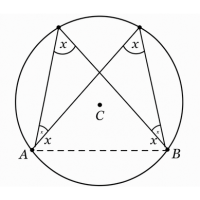
Angles subtended by the same chord in the same segment of a circle are equal.
If two angles stand on the same chord and lie in the same segment of the circle, then the angles are identical.
Why It Matters
This theorem is frequently used in proofs and angle calculations involving cyclic figures.
Applications
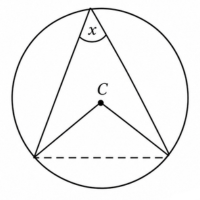
One of the most widely used circle theorems states:
The angle formed at the centre of a circle is twice the angle formed at the circumference by the same arc.
If:
Then the central angle is exactly double.
Applications
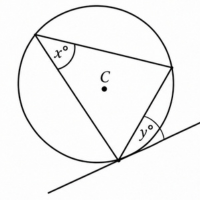
The Alternate Segment Theorem states:
The angle between a tangent and a chord is equal to the angle in the opposite segment subtended by that chord.
This theorem creates a relationship between tangents and angles inside the circle.
Applications
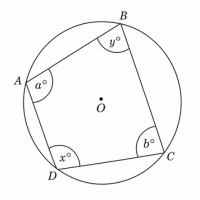
A cyclic quadrilateral is a quadrilateral whose vertices lie on a circle.
The Theorem states:
The opposite angles of a cyclic quadrilateral add up to 180°.
Mathematically:
Applications
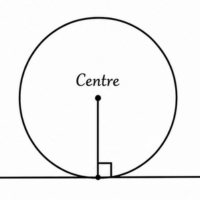
This Theorem States:
The angle between a radius and a tangent at the point of contact is always 90°.
Whenever a tangent touches a circle:
Applications
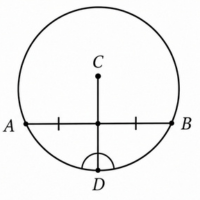
The Theorem states:
A perpendicular drawn from the centre of a circle to a chord bisects the chord.
If a line from the centre meets a chord at 90°:
Key Result
If AD and DB are portions of the chord:
Applications
Theorem 9: Tangents from an External Point are Equal
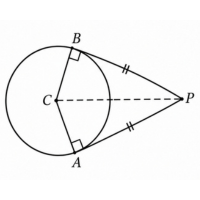
This Theorem states:
Two tangents drawn to a circle from the same external point are equal in length.
If PA and PB are tangents from external point P:
Additionally, the triangles formed with the centre are congruent.
Applications:
Students often lose marks because of small mistakes. Avoid these common errors:
Careful practice can help avoid these mistakes.
Circle theorems are not only useful for school exams but also form the foundation for advanced mathematics and engineering concepts.
They improve:
Students who understand geometry well usually perform better in mathematics overall.
Mathsalpha helps students learn mathematics simply and engagingly. From algebra and geometry to fractions and reasoning, we provide easy explanations, step-by-step solutions, and student-friendly learning resources designed especially for school students.
If you want to improve your understanding of circle theorems and geometry concepts, we offer:
Whether you are preparing for school exams or building strong maths fundamentals, Mathsalpha can help make mathematics easier and more enjoyable.
Mastering circle theorems is not just about memorising rules. It is about understanding the relationships between angles, chords, tangents, and arcs within a circle.
These theorems form the foundation of many geometry concepts and frequently appear in school exams and competitive mathematics assessments. By learning how and when to apply each theorem, students can solve complex geometric problems more accurately and efficiently.
Consistent practice with diagrams and problem-solving exercises will help build confidence, strengthen analytical thinking, and make geometry much easier to understand.



.png)
.png)
.png)
.png)

.png)
.png)

.png)
.png)


.png)
.png)
1.png)



.jpeg)




See our Trustpilot Excellent Reviews