








.png)
Prime numbers are one of the most important concepts in mathematics. They may look simple at first, but they play a huge role in solving maths problems, learning multiplication, and even in modern computer technology.
If you are a student trying to understand prime numbers easily, this guide will help you learn the concept step by step with examples.
A prime number is a number greater than 1 that has only two factors:
This means a prime number cannot be divided evenly by any other number.
For example:
So, 2, 3, and 5 are prime numbers.
A prime number has exactly two factors.
If a number has more than two factors, it is called a composite number.
Prime numbers are very important in mathematics and technology. Students learn prime numbers because they help in:
Prime numbers are also used in computers, mobile security, and internet encryption systems.
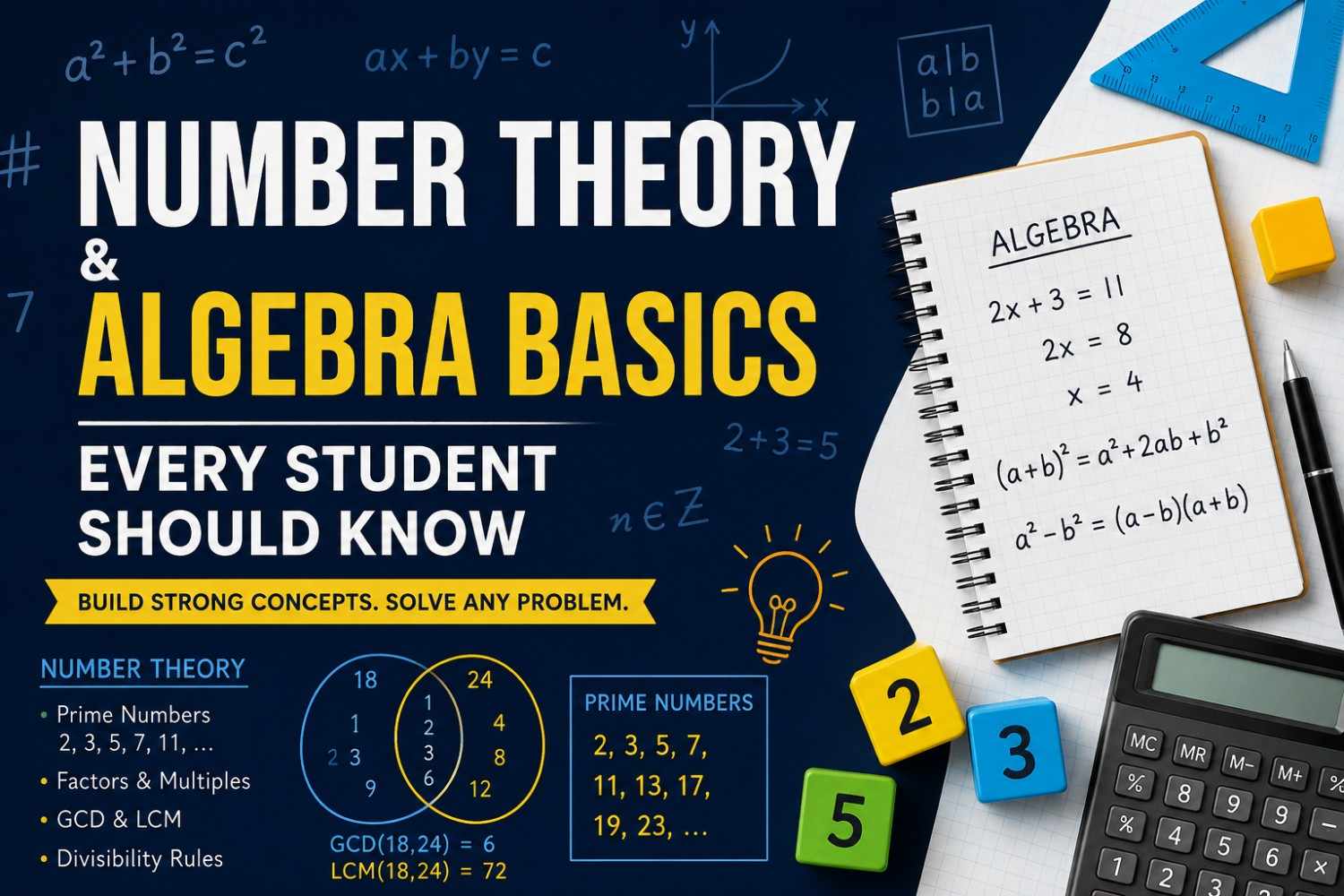
Here are some common prime numbers:
2, 3, 5, 7, 11, 13, 17, 19, 23, 29
These numbers cannot be divided equally by any other number except 1 and themselves.
The number 2 is special because
Every other even number can be divided by 2, so they are not prime numbers.
Many students get confused about the number 1.
The number 1 has only one factor: itself.
A prime number must have exactly two factors. Since 1 has only one factor, it is not a prime number.
You can follow these simple steps:
Prime numbers are always greater than 1.
If the number has only two factors, it is prime.
See if the number can be divided evenly by smaller numbers.
For example:
Prime numbers are not just used in school maths. They are also important in:
Many online security systems use prime numbers to keep data safe.
Here is an easy way for kids to remember prime numbers:
“A prime number has only two friends: 1 and itself.”
This simple sentence helps students quickly understand the concept.
Remember, 1 has only one factor.
Even though it is even, 2 is still prime.
Not all odd numbers are prime.
For example:
Try solving these questions:
Prime numbers are numbers greater than 1 that have exactly two factors: 1 and the number itself. Understanding prime numbers helps students build a strong foundation in mathematics. By practicing factors and division regularly, students can easily identify prime numbers and improve their problem-solving skills.
If you want simple and student-friendly maths learning resources, practice worksheets, and easy explanations for difficult concepts, MathsAlpha provides helpful guidance for students. We focus on making maths easy, engaging, and understandable for learners of all levels. Start improving your maths skills today with easy lessons and regular practice.


.png)
.png)
.png)
.png)

.png)
.png)

.png)
.png)

.png)
1.png)



.jpeg)




See our Trustpilot Excellent Reviews