








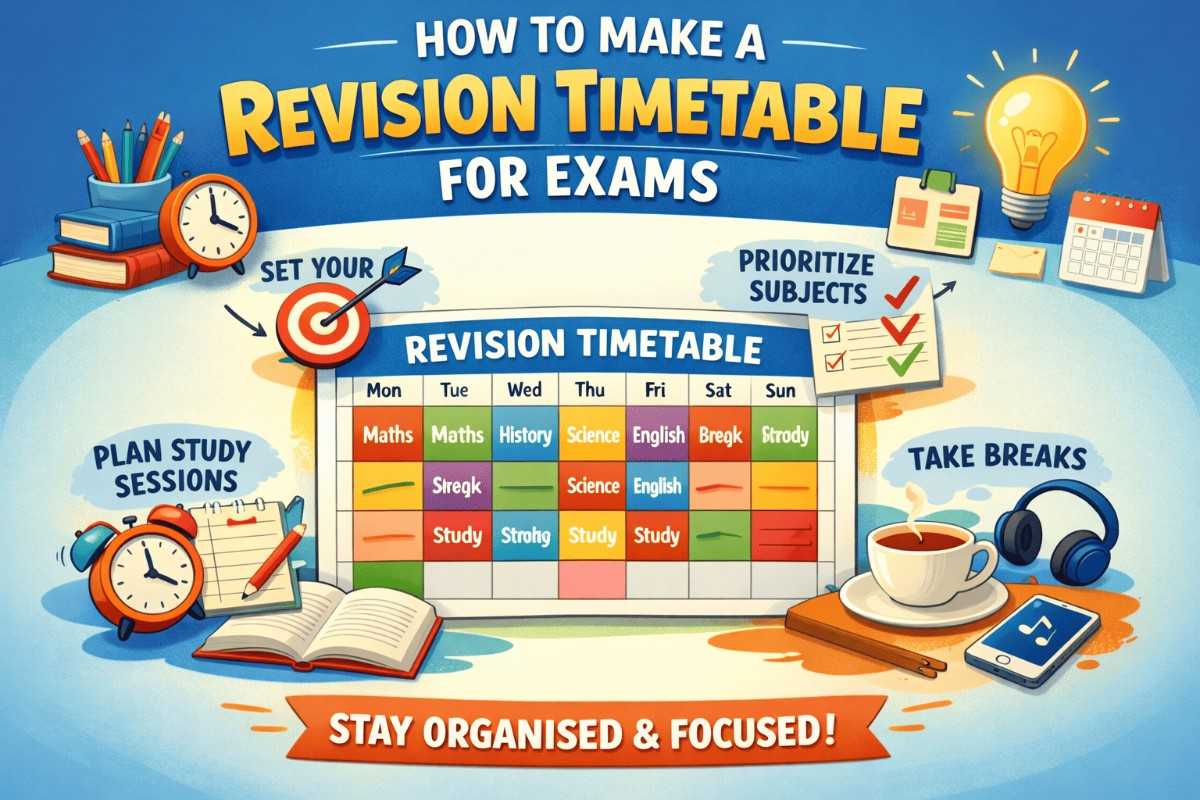
Making a revision timetable is a helpful way to organised your study time before exams. It shows you what to study and when, so you don’t feel overwhelmed.
A good timetable helps you cover all your subjects, including math, take breaks, and stay calm. Whether you’re preparing for GCSE maths, A-Level maths, or any big test, knowing how to make a revision timetable can make studying easier.
This blog will take you step-by-step through creating a simple timetable that fits your daily routine. It’s easy to follow and works for both students and parents who want to support their children.
Imagine trying to revise for lots of subjects all at once without any plan; it’s confusing and tiring. A revision timetable helps by:
Whether you’re a Year 10 student preparing for GCSE Maths or revising for A-Level Maths, making a revision timetable is a smart way to manage your time.
Let’s get started with a plan that helps you study smart and feel confident for your exams.
Creating a revision timetable helps organised your study time, making exam preparation less stressful. Here are easy steps to guide you:
|
Steps |
Details |
|
|
1 |
Know Your Exam Dates and Subjects |
List all exams and subjects. Check your child’s timetable from the school or exam board. |
|
2 |
Gather Revision Materials |
Collect textbooks, notes, past papers, and revision guides. |
|
3 |
Decide Time per Subject |
Spend more time on harder topics or weaker subjects. |
|
4 |
Choose Timetable Style |
Use paper, a digital planner, or an app; try weekly planners, charts, or colour codes. |
|
5 |
Block Fixed Commitments |
Mark school, meals, exercise, and family time to find free study slots. |
|
6 |
Plan Revision Sessions |
Study in 30-50 minute sessions, take 5-10 minute breaks, rotate subjects, do practice. |
|
7 |
Be Realistic and Flexible |
Avoid long sessions; adjust the timetable if plans change or if feeling tired. |
|
8 |
Stick & Track Progress |
Follow your plan, tick off completed sessions, and catch up if you miss any. |
Before making your timetable, list all your exams and their dates. Write down each subject you need to revise. This way, you’ll know what you have to cover and how much time you have.
If you’re a parent, help your child by checking their exam timetable from school or their exam board's website.
Get your textbooks, notes, and any past math papers or revision guides ready. You’ll need these so you can plan what topics to study each day.
Not all subjects need the same amount of revision. Think about:
Spend more time on topics that need extra work.
You can make your revision timetable on paper or use a computer or an app. Here are some popular options:
Pick the style that you find easiest to follow.
Put in your fixed activities like school hours, meals, exercise, and family time. This helps you see when you actually have free time for revision.
Now, fill in your free time with revision sessions. Keep these points in mind:
Example: On Monday after school, you might study math for 45 minutes, then take a 10-minute break, and then do English for 45 minutes.
Don’t try to revise for hours without stopping - it can make you tired and less effective. School events or feeling unwell might change your plans. So, try to be flexible and adjust your timetable when needed.
Try your best to follow your timetable. Tick off sessions as you complete them - it feels good to see your progress. If you miss a session, don’t worry, just try to catch up later.
If your child is preparing for a math exam and looking for help in how to make a revision timetable, MathsAlpha offers personalised guidance for your child. We provide easy-to-follow plans and tips to help your child organise their study time and boost exam confidence. Contact us at info@mathsalpha.com or call +44 7834 229046 to get started and support your child’s exam preparation journey.














.png)

.png)
.png)
.png)


.png)
.png)
.png)
.png)


.png)

.png)
1.png)



.jpeg)



See our Trustpilot Excellent Reviews