






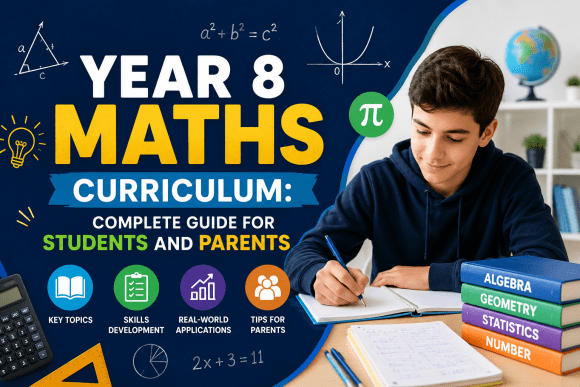
Mathematics in Year 8 helps students strengthen their problem-solving skills and build confidence in working with numbers, algebra, geometry, graphs, statistics, and other essential mathematical concepts. At this stage, students move beyond basic arithmetic and begin exploring more advanced topics while continuing to improve the skills learned in earlier years.
Year 8 maths focuses on logical thinking, practical application, and developing the ability to solve real-world problems using mathematics. Students learn how to work with equations, percentages, graphs, probability, geometry, and introductory trigonometry. These topics create a strong foundation for future learning, including GCSE mathematics.
The Year 8 maths curriculum covers several key areas:
Numbers and calculations
Algebra
Fractions, decimals, and percentages
Ratio and proportion
Geometry and angles
Graphs and coordinates
Statistics
Probability
Number patterns and sequences
Trigonometry
Sets and Venn diagrams
Vectors
Each topic helps students develop mathematical reasoning and confidence in solving increasingly complex problems.
Number work remains a fundamental part of the curriculum. Students build on their understanding of different types of numbers and learn efficient calculation methods.
Key topics include:
Calculations with decimals
Negative numbers
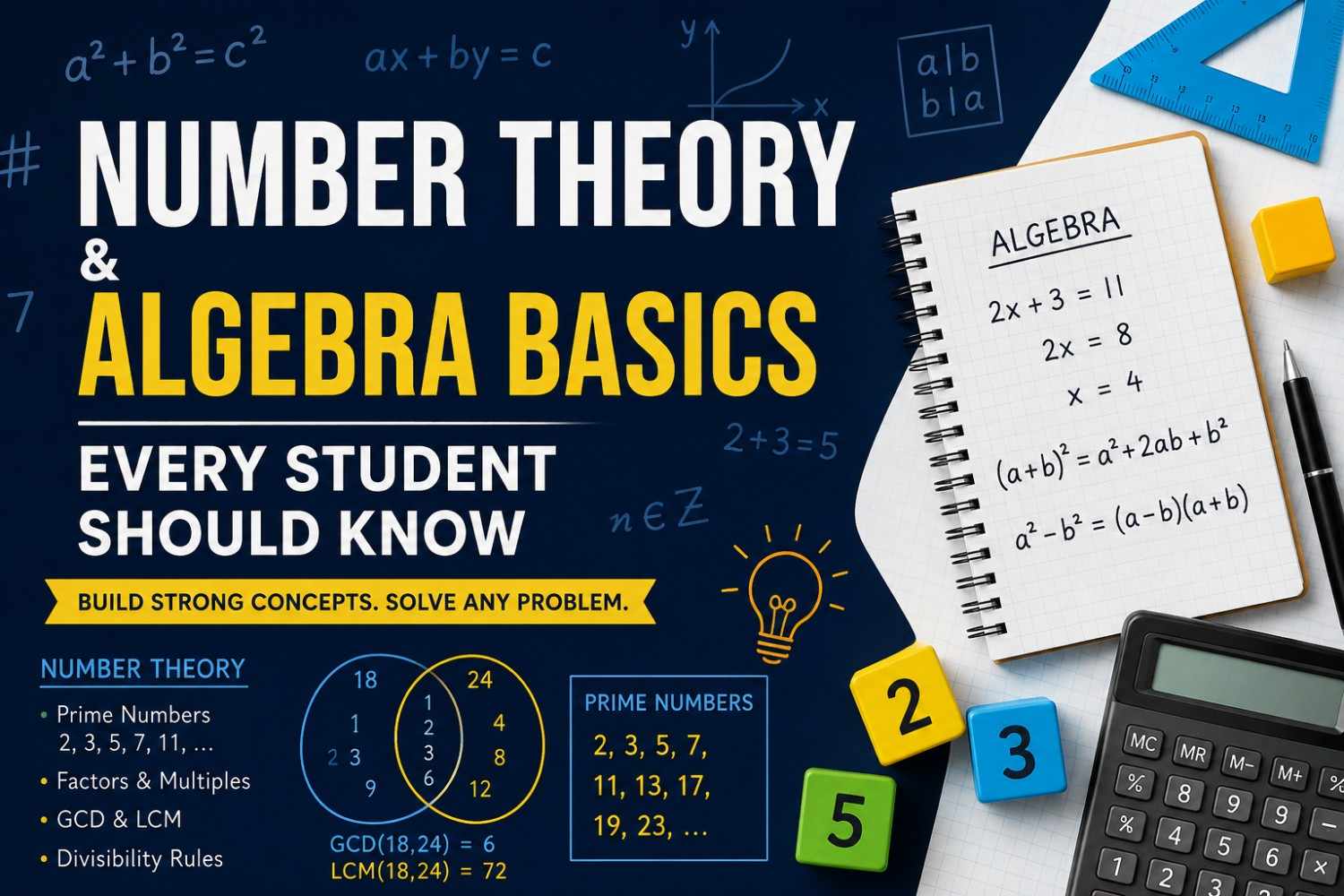
Prime numbers and prime factorisation
Highest Common Factor (HCF)
Lowest Common Multiple (LCM)
Rounding and estimation
Upper and lower bounds
Trial and improvement methods
Students also explore different subsets of real numbers and learn how estimation can be used to check answers and solve problems more quickly. These skills are valuable in everyday situations such as budgeting, shopping, measurements, and financial calculations.
Algebra becomes a major focus during Year 8. Students learn how letters and symbols can represent unknown values and how these can be manipulated to solve problems. They begin by simplifying algebraic expressions.
For example:
As their understanding grows, students learn:
Expanding single and multiple brackets
Factorising expressions
Solving linear equations
Solving simultaneous equations
Understanding quadratic expressions
Solving linear inequalities
Algebra encourages logical thinking and problem-solving while preparing students for more advanced mathematical studies in later years.
Year 8 students continue to strengthen their understanding of fractions, decimals, and percentages because these concepts appear throughout mathematics and everyday life.
Fraction topics include:
Equivalent fractions
Mixed numbers
Improper fractions
Addition and subtraction of fractions
Multiplication and division of fractions
These skills are particularly useful in banking, shopping, discounts, savings, and personal finance.
Ratio helps students understand how quantities compare with one another and is an important part of Year 8 mathematics.
Students learn:
Ratio notation
Dividing quantities in a ratio
Proportional sharing
Solving ratio problems
Understanding map scales
Solving ratio equations
They also learn how ratios can be used to increase or decrease quantities proportionally. These concepts are commonly applied in cooking, design, maps, and business calculations.
Geometry introduces students to shapes, measurements, and spatial reasoning. This area of maths develops visual understanding and practical problem-solving skills.
Students study:
Angles on straight lines
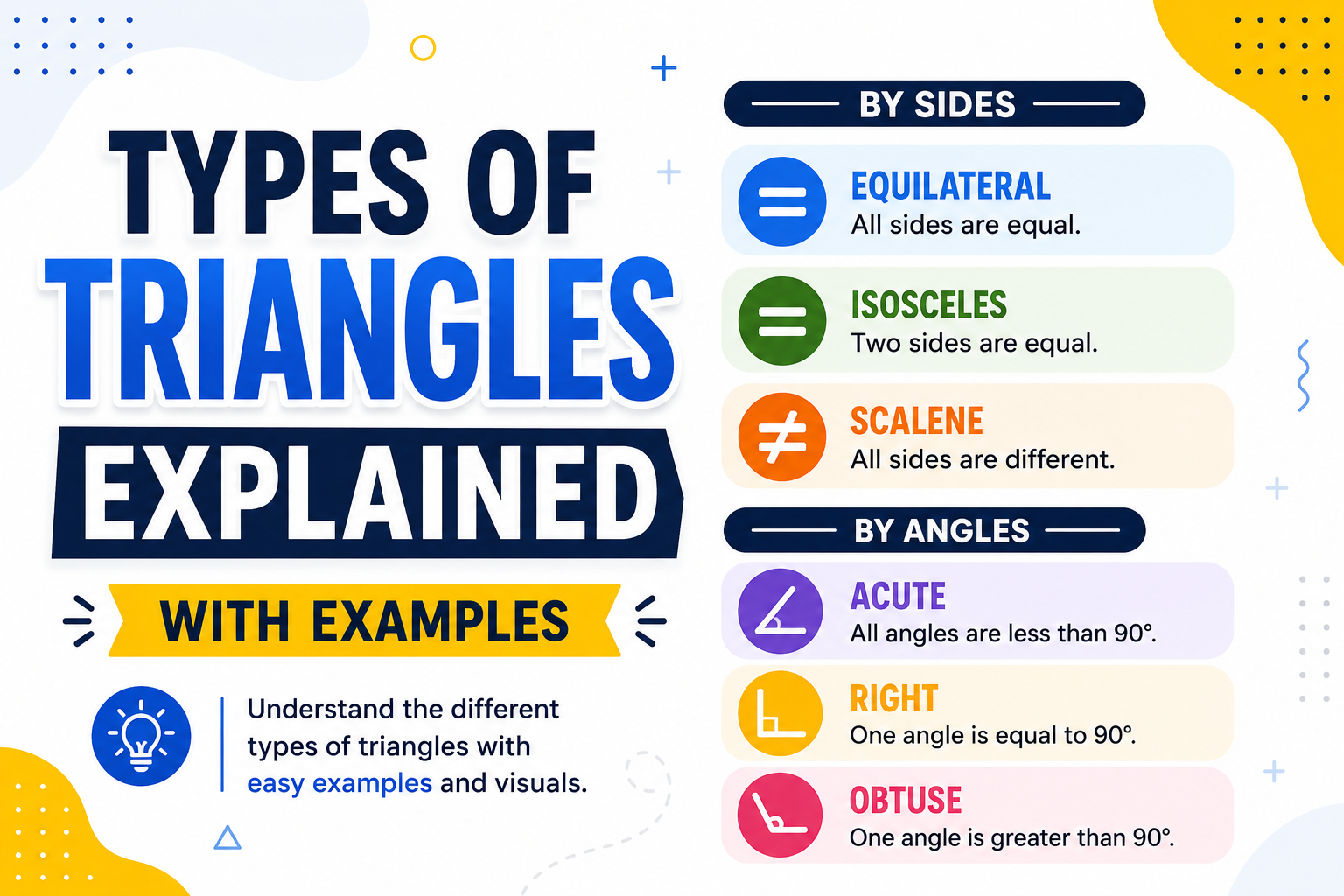
Angles in triangles
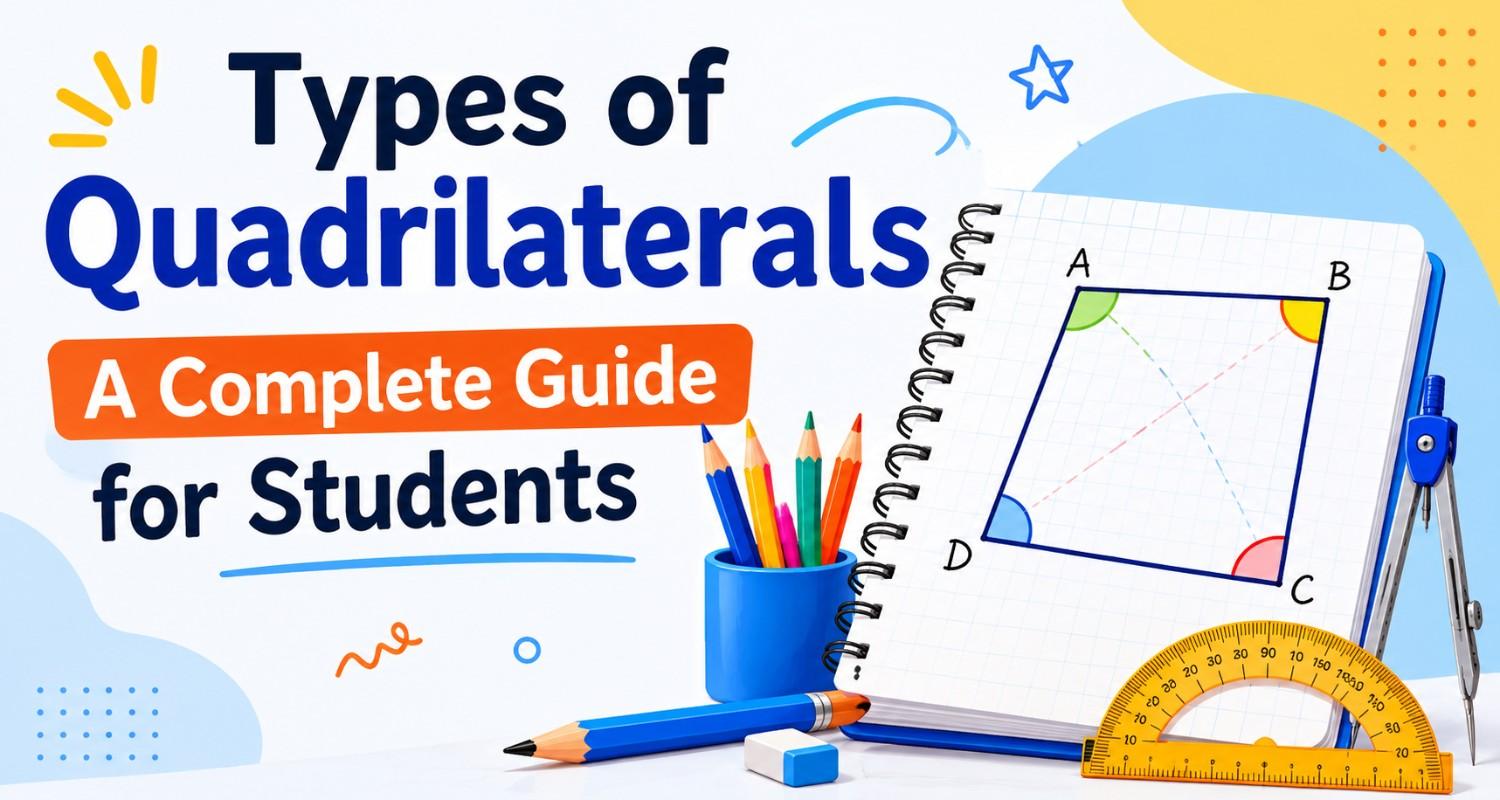
Angles in quadrilaterals
Angles in polygons
Angles formed by parallel lines
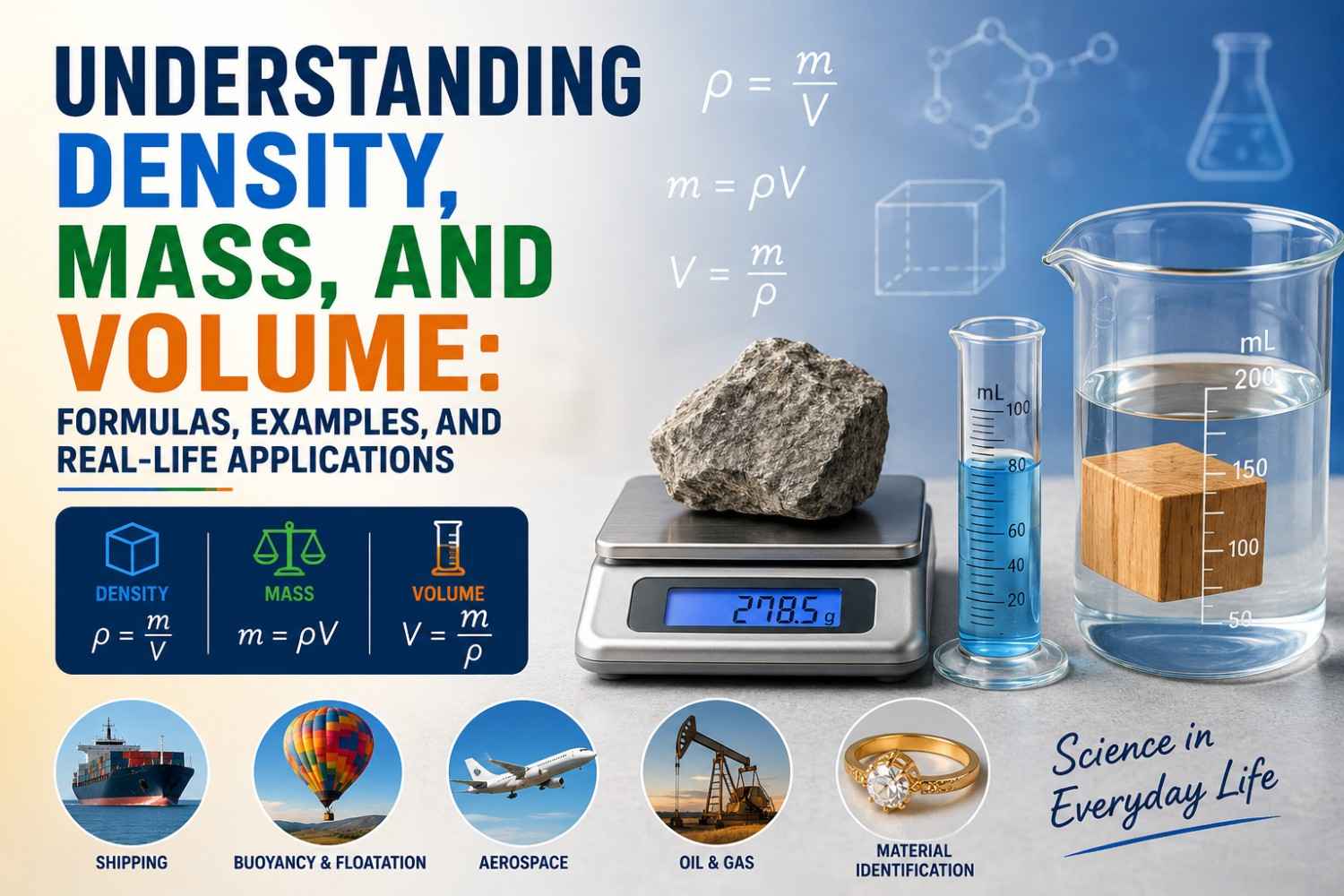
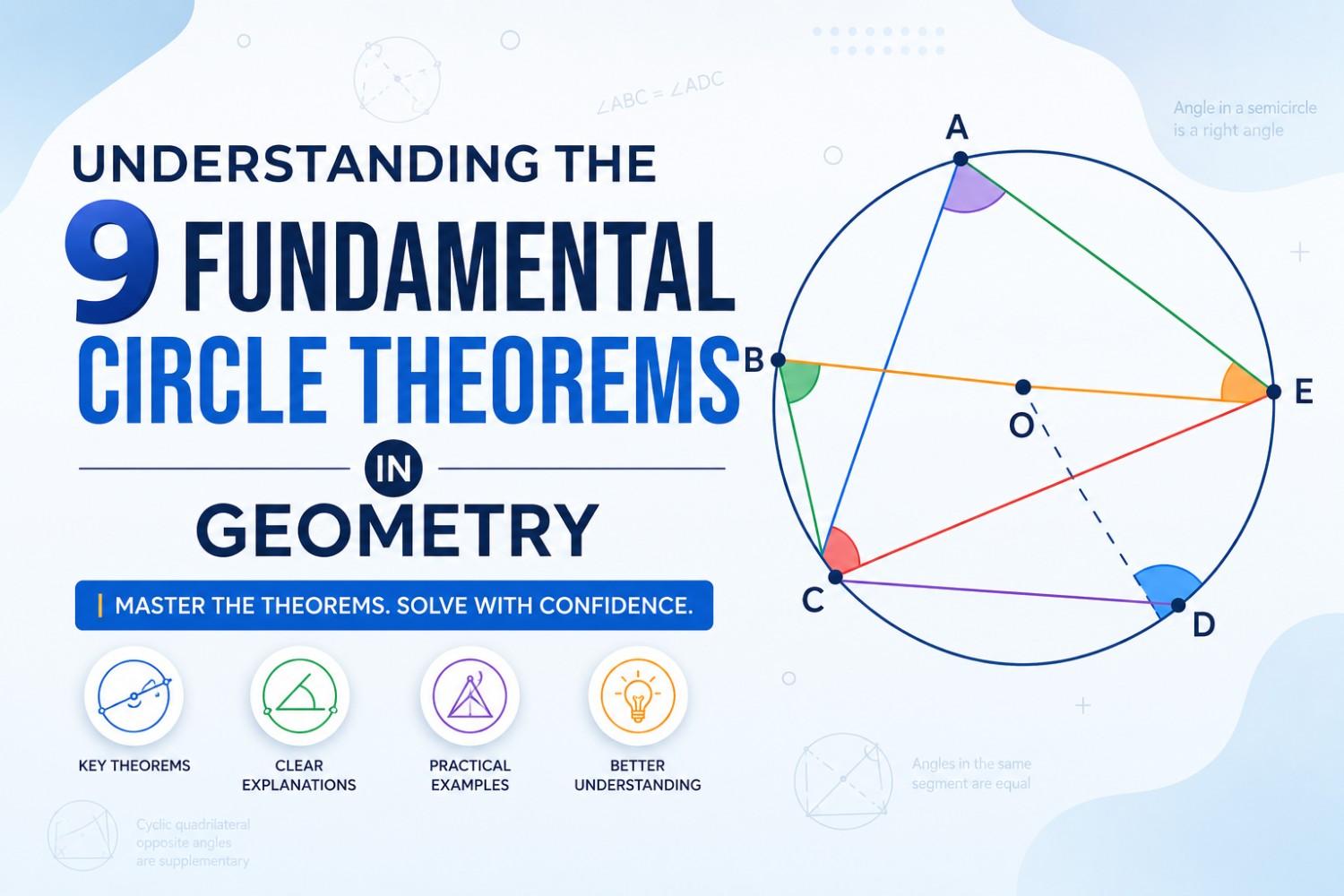
Students learn how to calculate circumference, arc length, and the area of sectors. In addition, they are introduced to three-dimensional shapes and explore volume and surface area calculations for prisms, cylinders, cones, and spheres.
Graphs help students understand relationships between variables and represent information visually.
Key topics include:
Cartesian coordinates
Plotting points
Straight-line graphs
Gradients
Midpoints
Equations of straight lines
Students learn how positive and negative gradients affect the appearance of a graph and how equations describe graphical relationships.
Graph skills are widely used in science, engineering, economics, business, and data analysis.
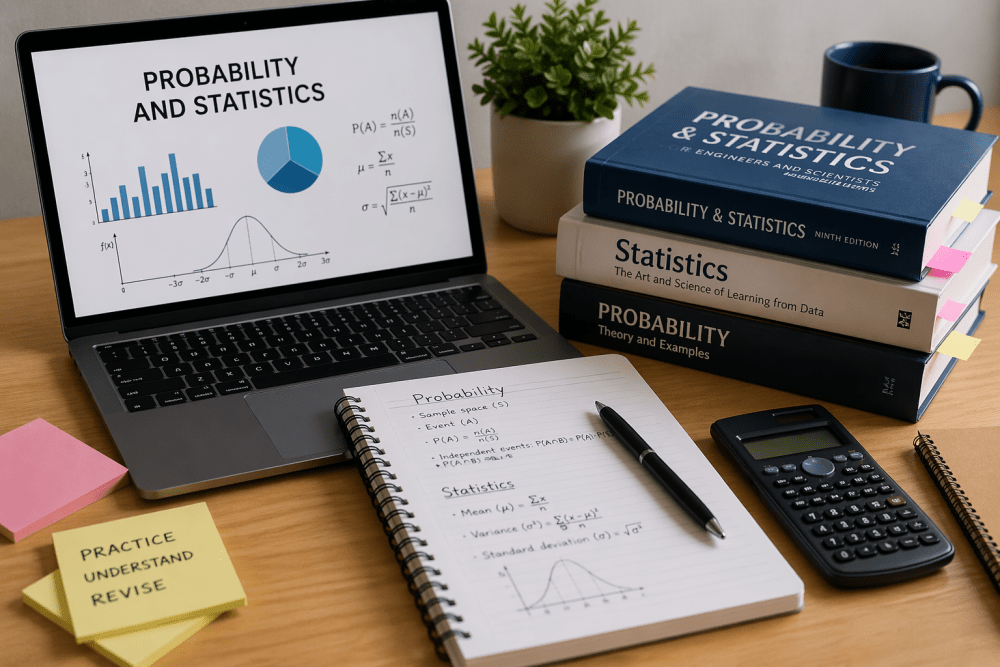
Statistics teaches students how to collect, organise, interpret, and analyse data.
Students learn to calculate:
Mean
Median
Mode
Range
They also study different methods of presenting data, including:
Bar charts
Pie charts
Stem-and-leaf diagrams
Scatter graphs
Frequency tables
By interpreting data and identifying trends, students develop analytical skills that are valuable across many academic subjects.
Probability helps students understand how likely events are to occur.
Topics include:
Experiments and outcomes
Listing possible outcomes
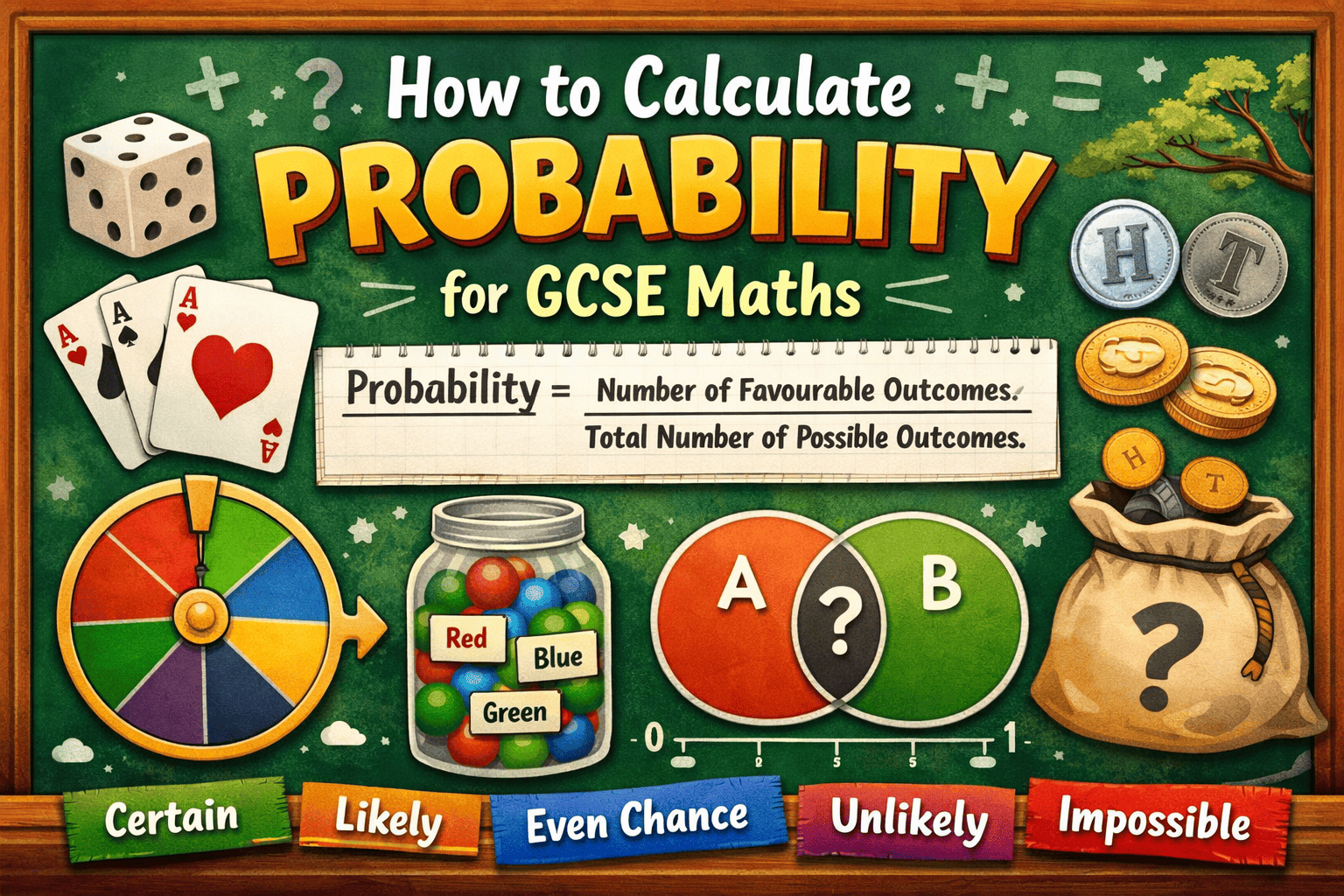
Calculating probability
Probability scales between 0 and 1
Students learn the meaning of impossible, unlikely, likely, and certain events. Probability has many practical applications, including weather forecasting, insurance, sports analysis, scientific research, and gaming.
Recognising patterns is an important mathematical skill. Year 8 students explore different types of sequences and number relationships.
Topics include:
Triangle numbers
Square numbers
Pascal’s Triangle
Arithmetic sequences
Studying patterns helps students develop prediction skills and supports learning in algebra and higher-level mathematics.
Year 8 often provides students with their first introduction to trigonometry.
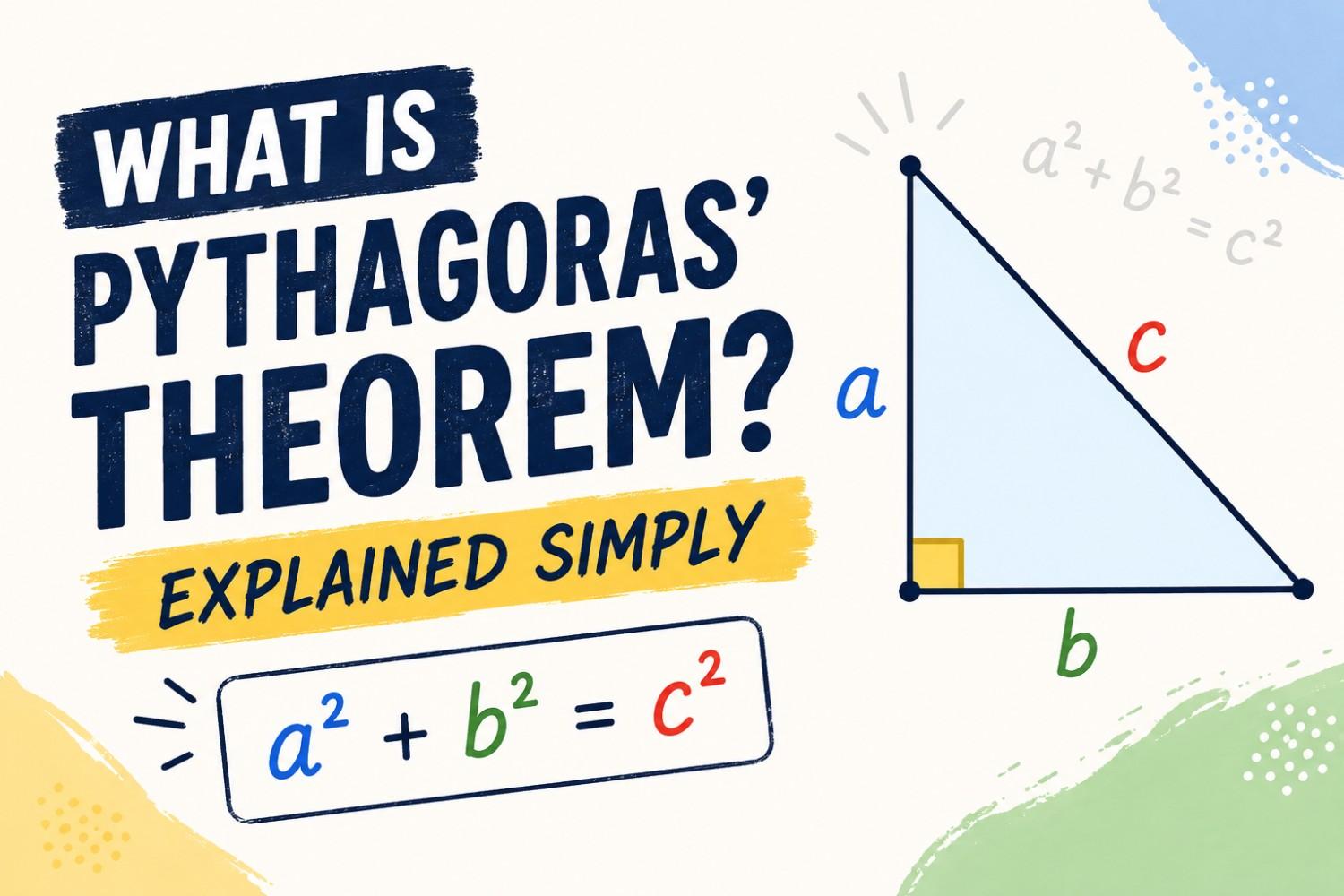
Students learn:
This theorem is used to find missing sides in right-angled triangles.
Students are introduced to:
Sine (sin)
Cosine (cos)
Tangent (tan)
These ratios allow students to calculate unknown sides and angles in triangles and form the basis for more advanced trigonometry in later years.
Students are also introduced to basic set theory and vectors.
Set topics include:
Set notation
Venn diagrams
Union and intersection
Complements of sets
These concepts help students organise information and improve logical reasoning.
Vector topics include:
Scalars and vectors
Column vectors
Adding vectors
Subtracting vectors
Magnitude of vectors
Vectors are widely used in physics, engineering, navigation, and computer graphics.
The Year 8 maths curriculum introduces a wide range of important mathematical concepts that prepare students for future studies. From algebra and geometry to statistics, probability, and trigonometry, students develop the knowledge and skills needed for academic success and practical problem-solving.
For students who need additional support, MathsAlpha Year 8 Online Maths Classes provide structured lessons designed to strengthen core mathematical concepts in a simple and engaging way. The program covers essential Year 8 topics through guided instruction, regular assessments, small-group learning, and personalised tutor support, helping students build confidence and achieve their full potential in mathematics.
.png)
.png)
.png)
.png)
.png)
.png)
.png)
.png)
.png)
.png)
1.png)


.jpeg)



See our Trustpilot Excellent Reviews