








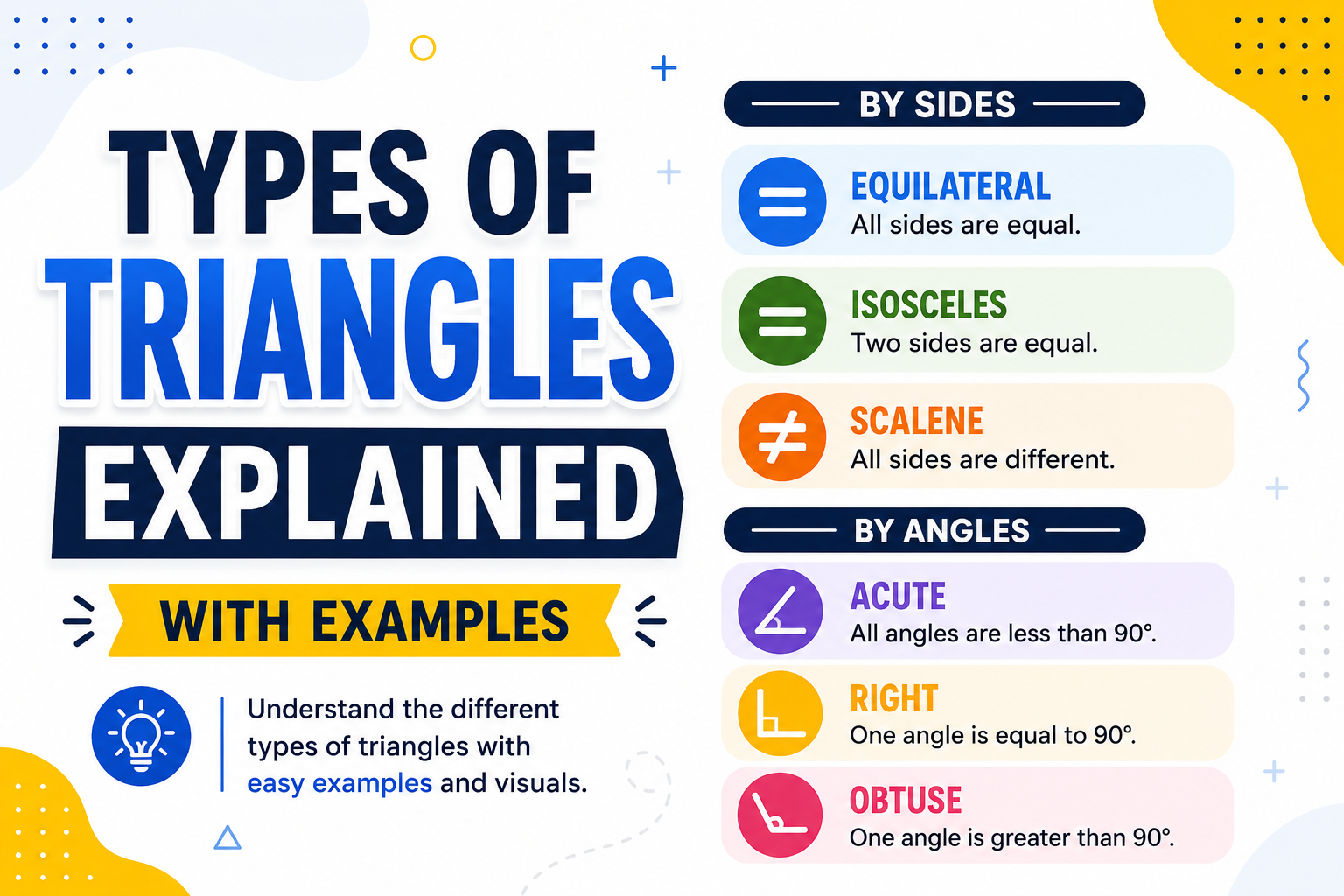
Triangles are one of the most important shapes in mathematics. They are used in geometry, engineering, architecture, design, and even computer graphics. A triangle is a closed shape formed by three sides and three angles. Understanding the different types of triangles helps students build a strong foundation in geometry and problem-solving.
This guide explains the types of triangles based on angles and sides, along with important properties and examples.
A triangle is a closed shape formed by three straight line segments. The sum of all three interior angles of a triangle is always 180°.
a + b + c = 180°
Triangles can be classified according to the size of their angles.
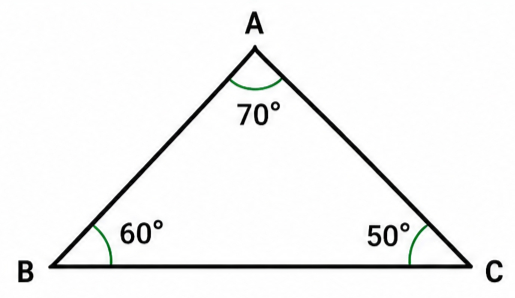
An acute triangle has all three angles less than 90°.
Characteristics
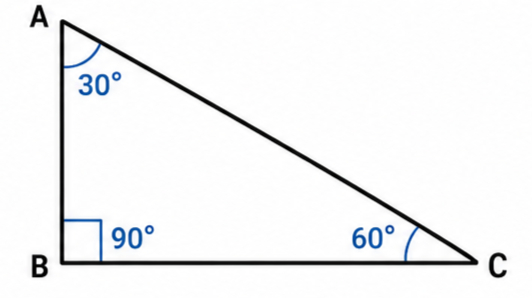
A right triangle has one angle exactly equal to 90°.
Characteristics
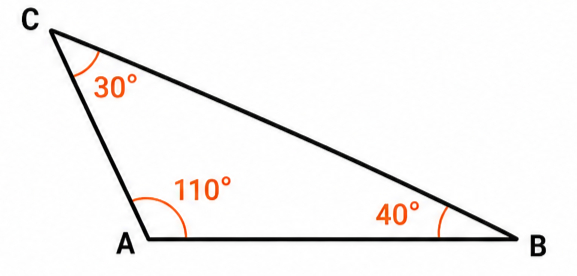
An obtuse triangle has one angle greater than 90°.
Characteristics
Triangles can also be classified according to the lengths of their sides.
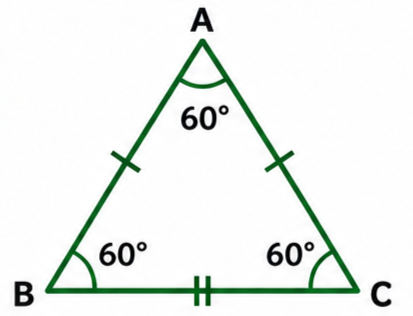
An equilateral triangle has all three sides equal.
Characteristics
Since the sum of angles in a triangle is 180°:
60° + 60° + 60° = 180°
Example
A triangle with side lengths 5 cm, 5 cm, and 5 cm.
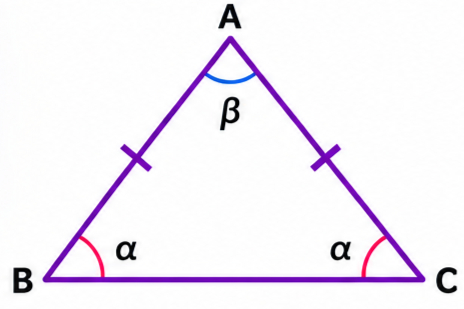
An isosceles triangle has two equal sides.
Characteristics
Example
A triangle with side lengths 6 cm, 6 cm, and 8 cm.
If the top angle is 70°, the remaining two angles will be equal.
Using the property:
a + a + 70° = 180°
The value of each equal angle becomes 55°.
3. Scalene Triangle
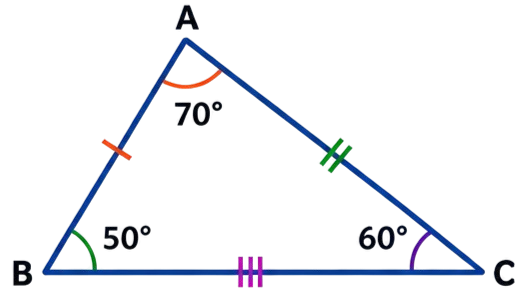
A scalene triangle has all three sides of different lengths.
Characteristics
Example
A triangle with side lengths 4 cm, 5 cm, and 7 cm.
Since all sides are different, it is a scalene triangle.
Every student should remember these key triangle properties:
The three interior angles always add up to 180°.
If two sides are equal, the opposite angles are also equal.
All three sides and all three angles are equal.
An exterior angle of a triangle is equal to the sum of the two opposite interior angles.
The sum of any two sides of a triangle must always be greater than the third side.
Triangles are one of the first geometric shapes students study in mathematics. Understanding triangle classification helps in:
A strong understanding of triangles makes topics like polygons, circles, coordinate geometry, and trigonometry much easier to learn.
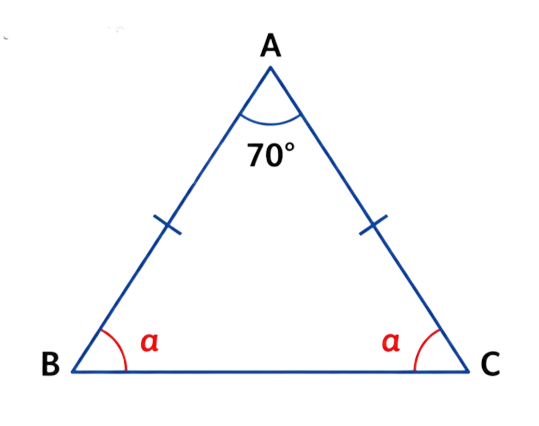
In an isosceles triangle, the top angle is 70°.
Since the two base angles are equal:
a + a + 70° = 180°
2a = 110°
a = 55°
Answer: 55°
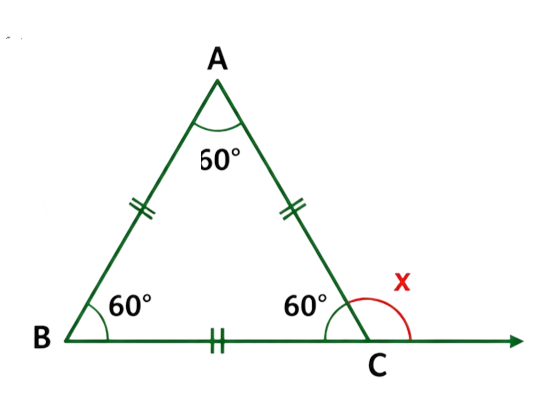
Each interior angle of an equilateral triangle is 60°.
60° + x = 180°
x = 120
Answer: 120°
MathsAlpha helps students build confidence in mathematics through structured lessons, expert guidance, and interactive learning methods. Whether you're learning basic geometry, mastering triangles, preparing for GCSE Maths, or improving problem-solving skills, we provide personalized support to help students achieve better results. Join us today and make maths learning simple, engaging, and effective.
Triangles are classified based on their angles and sides. By angles, they are acute, right, and obtuse triangles. By sides, they are equilateral, isosceles, and scalene triangles. Understanding these classifications and their properties is essential for success in geometry and higher mathematics. Once students master triangle concepts, they gain a strong foundation for many advanced mathematical topics.

.png)
.png)
.png)
.png)

.png)
.png)
.png)

.png)


.png)
.png)
1.png)



.jpeg)



See our Trustpilot Excellent Reviews